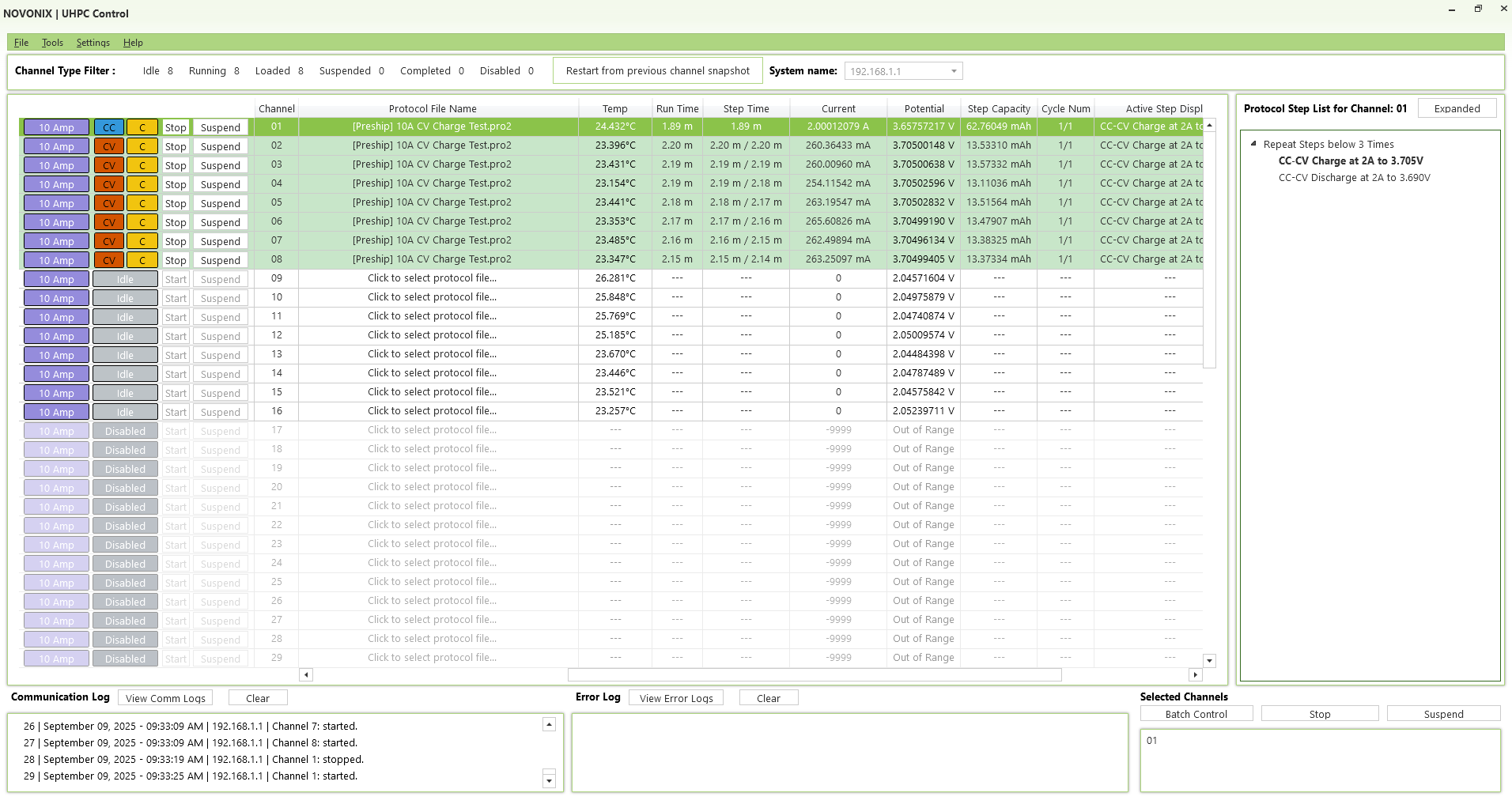
Standard testing protocols are established procedures and conditions for evaluating various aspects of battery performance, durability, and safety, usually defined by organizations like ISO, IEC, SAE, or UN regulations (for transport safety). They ensure consistency in testing across different labs and manufacturers. Examples include specific cycles for measuring capacity (like CC-CV charging to 4.2V, discharge to 2.5V at a certain rate), cycle life tests (such as 80% depth-of-discharge cycling until capacity falls to 80% of the initial), and calendar life tests (storage at certain temperatures and SOCs with periodic checks). Safety tests have strict testing protocols for tests like nail penetration, overcharge (charging a cell well beyond its normal voltage to see if it vents or ignites), external short circuit, thermal stability tests (like oven tests or DSC on materials), etc. Performance tests might also follow standards, e.g., SAE J1798 for electric vehicle batteries outlines standard performance tests. Using these protocols, one can compare results across different batteries or ensure a battery meets required specifications (e.g., UN38.3 is a set of tests a battery must pass to be shipped by air).