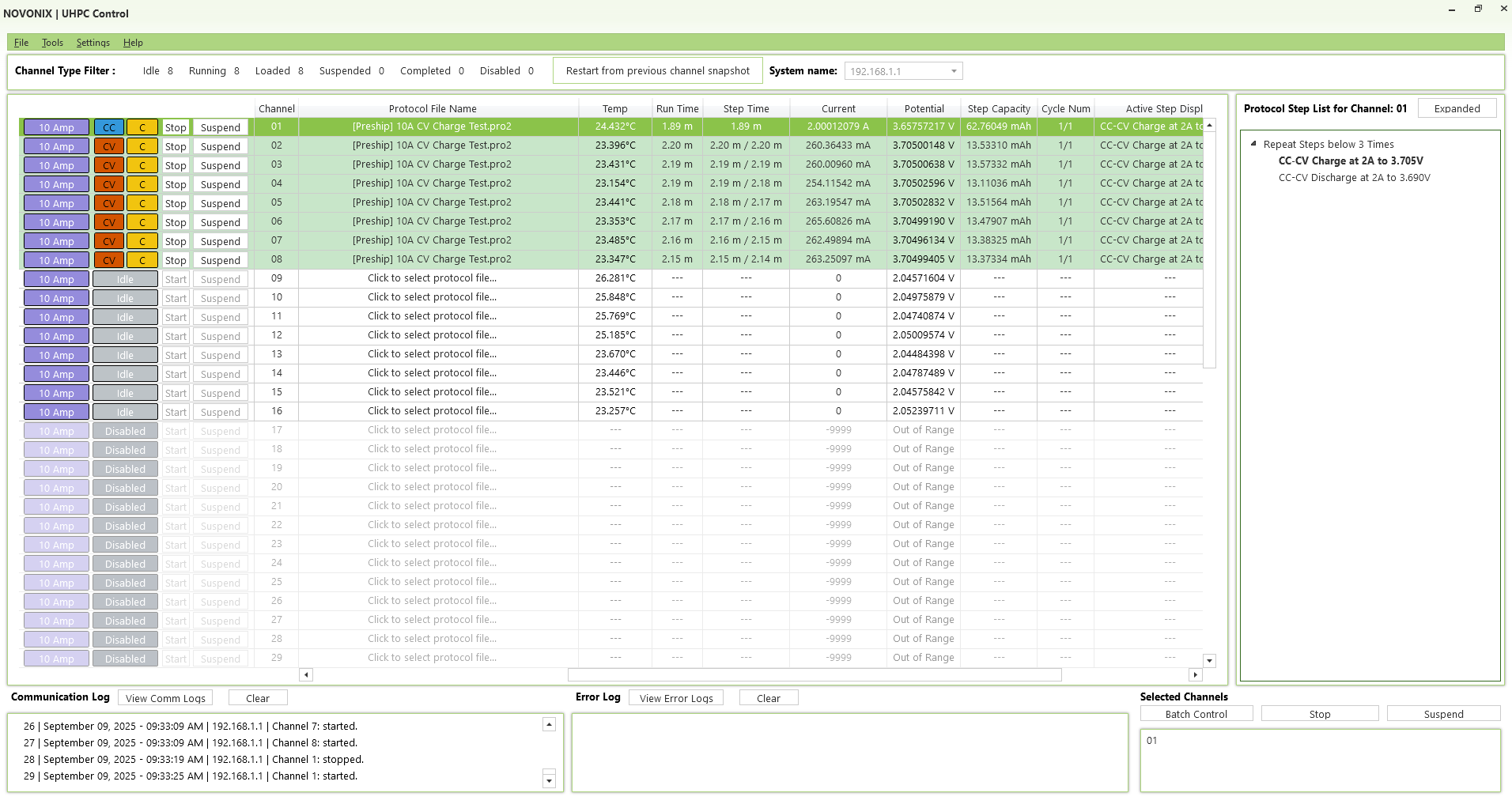
Performance metrics in batteries are the key quantitative measures used to evaluate how well a battery meets its intended performance goals. These include metrics like capacity (how much charge it holds, usually in mAh or Ah), energy density (Wh/kg or Wh/L), power density (W/kg), internal resistance (which affects power and heat), cycle life (number of cycles until capacity drops to a certain percentage of original), calendar life (how long it lasts in storage or light use, in years), self-discharge rate (loss of charge per time when not in use), efficiency (coulombic efficiency per cycle, energy efficiency, etc.), rate mapping on charge and discharge and charge end-point capacity slippage (the change in the amount of charge that a battery can accept during the final phase of charging over time). There are also application-specific metrics; for EVs, for example, fast charge time (time to charge to 80%) is critical, as is operating temperature range. In essence, performance metrics turn battery behavior into numbers that can be compared and tracked.